Expertise in-house: SDSs and labelling
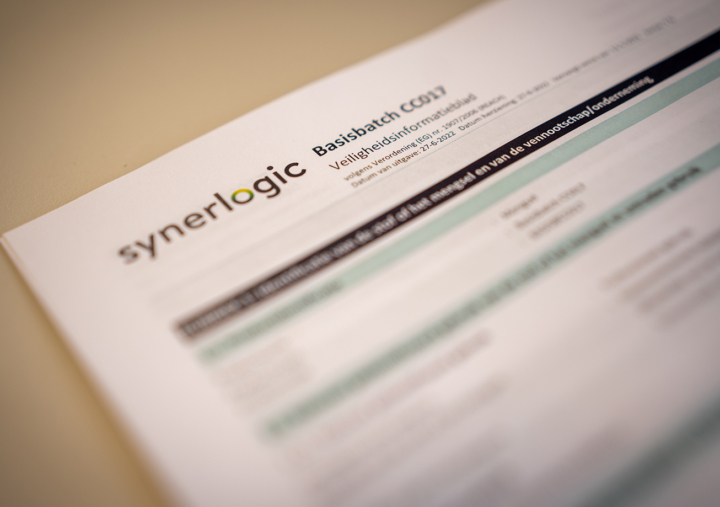
A Safety Data Sheet (SDS) is also known as a Safety Data Sheet (SDS), an MSDS or an e-SDS. An SDS is a document that provides important information on the safety and use of chemical products. An SDS contains detailed information on the risks and safety measures related to chemicals and products. An SDS is legally required for many chemical products and is often provided by manufacturers, suppliers or distributors.
This makes an SDS an important tool for safe handling of chemicals for the entire chain. An SDS is the information carrier from manufacturers to the next links in the supply chain and end users of the product.
Drafting an SDS
Drafting an SDS is a complex process. It requires extensive knowledge of chemistry, safety and (specific) regulations. The responsible supplier must check that it complies with key legislation requirements. One way to check this is through this SDS checklist. As a manufacturer, Synerlogic draws up an SDS for the products. We also offer the drafting of SDSs as a service to our customers who produce products at Synerlogic. Some of the topics you will find in the SDS:
- Identification of the product
- Hazard indication e.g. classification and labelling
- Composition and ingredient information
- First-aid and fire-fighting measures
- Handling and storage measures
- Exposure and personal protection measures
- Physical and chemical properties
- Toxicological information
- Regulatory information
The full SDS consists of a 16-chapter document, in which the REACh legislation serves as an important basis. We also require that the products we receive comply with the REACh legislation.
REACh is a substance regulation applicable within Europe. For Synerlogic, this means that we only purchase products within Europe. Synerlogic checks its suppliers on whether they comply with the REACh regulation and have a REACh number. This information is needed for the SDS, starting with chapter 1 of the SDS where the European address of the supplier must be mentioned.
Correct labelling of chemical products
A label of a chemical product must meet several requirements. For instance, the name of the product must be clearly stated, the label must be properly attached and legible and contain manufacturing information. Symbols must also meet certain visual conditions and dimensions.
The following information is extracted from the SDS for use on the label:
- Safety symbols and warnings
These symbols can indicate hazards such as flammability, toxicity, corrosivity and so on. Follow the guidelines for proper, clear display on the label. - Composition and ingredients
List the product’s most hazardous chemical ingredients and their levels.
- Safety information
Place safety instructions and warnings on the label; so-called H and P sentences. - Instructions for use
Information on how to use, store or dispose of the product. - Language
The label should be drawn up in the language of the country where the product is supplied. - Regional labelling requirements
Comply with the regulations of the country where the product is supplied. - Contact information
Include contact information of the supplier.
For both a label and an SDS, it is important to follow the (local) guidelines when drafting. Would you like to know more about our SDSs and label drafting or get in touch with our specialists?