The difference between contract manufacturing and toll manufacturing
The chemical industry is considered one of the most diverse and essential sectors worldwide with an extensive range of products ranging from pharmaceutical drugs to food additives and industrial chemicals. Chemical manufacturing requires specialised production facilities and resources. Companies supplying products do not necessarily have to manufacture them themselves, but can choose to outsource through contract manufacturing and toll manufacturing. In this article, we take a closer look at these options and clarify the differences between them.
Contract manufacturing: working together with experts
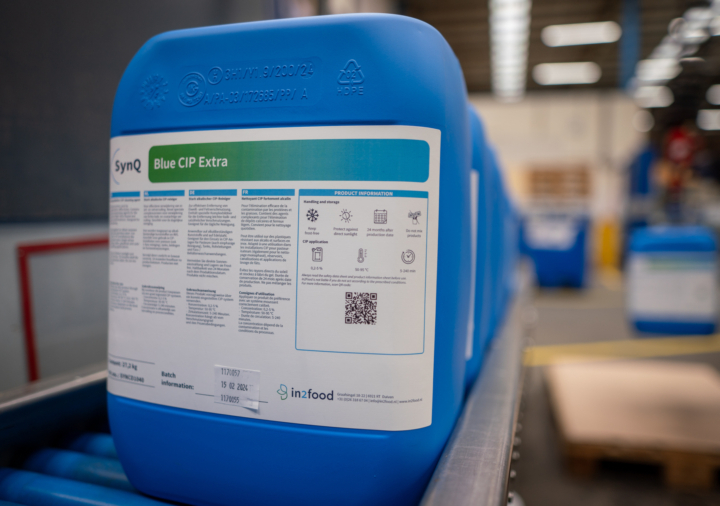
In contract manufacturing, a company joins forces with an external manufacturer to make a product according to the client’s specifications and formulas. The entire production process is entrusted to this external manufacturer, also known as the ‘contract manufacturer’. As a contract manufacturer, one bears full responsibility for the production process, from sourcing and purchasing raw materials to producing, packaging and delivering the final product.
Why choose contract manufacturing?
Important benefits of contract manufacturing are:
- Flexibility in production capacity
- Taking advantage of economies of scale from raw material procurement
- Comprehensive research of raw material suppliers
- Ability to gain access to specialised expertise and facilities such as Strategic Sourcing, Research & Development and SHEQ (compliance and safety).
- Capacity to focus on core tasks such as sales, product development and marketing.
Choosing a contract manufacturer is a careful process, where attention should be paid to compliance with all legal regulations and quality standards. This ensures product quality.
Toll manufacturing: outsourcing of production processes
In the case of toll manufacturing, the production process is also outsourced but a company purchases the raw materials itself. With this, the raw materials remain the property of the company and are delivered to the external manufacturer, referred to as the ‘toll manufacturer.’ Thus, the intellectual property of the formulas also remains with the company. The toll manufacturer is responsible for the actual production. The toll manufacturer stirs and mixes the chemistry and performs quality control. The manufactured products are then collected for further processing and distribution.
Why choose toll manufacturing?
In toll manufacturing, the external company (toll manufacturer) manages the production processes and resources, while the outsourcing company focuses mainly on formulating products and managing the supply chain.
Key advantages are:
- Flexibility in production capacity
- Ability to access specialised expertise and facilities such as Research & Development and SHEQ (compliance and safety)
- Capacity to focus on core tasks such as product development and marketing
Choosing between contract manufacturing and toll manufacturing
Both contract manufacturing and toll manufacturing offer valuable options for companies that want to outsource production to a third-party partner. To make the right choice, it is important to consider your needs and goals. What best fits your unique circumstances and growth strategies? This depends on several factors:
- Complexity of the product:
For complex products with specific requirements, contract manufacturing may be preferable due to a closer involvement and quality control. - Scalability:
Can production volumes fluctuate? Then toll manufacturing can offer flexibility without the need to build or maintain in-house facilities. - Resources and expertise:
Companies that do not have specialised manufacturing facilities or technical knowledge can benefit from the expertise of a toll manufacturer. - Risk management:
Contract manufacturing can help companies better manage risks, as they have more control over the entire production process and supply chain. - Cost structure:
It is important to carefully evaluate the total costs, including labour, raw material inventory and transportation, when making a decision.
In practice, it is common for a combination of contract and toll manufacturing to gain the most benefits.
Featured: The added value of raw material procurement
In contract manufacturing, the sourcing and procurement of raw materials is done by the contract manufacturer. Raw material procurement for the chemical industry is an important part of supply chain management in this sector. It is a complex process that requires the right expertise. The goal is to optimize the availability, quality and cost of the necessary raw materials to support production processes. This involves a number of aspects:
- Raw material selection
It starts with identifying the right raw materials that are needed for the production of chemical products. This includes evaluating the specifications, properties and suppliers of raw materials to ensure that they meet quality and performance requirements. Based on the formulations, Synerlogic will look at whether they already have the necessary raw materials in-house, need to be purchased or are supplied by the customer. Raw materials that Synerlogic purchases itself and usually has in stock are sodium hydroxide, sodium hypochlorite, sulphuric acid, phosphoric acid, hydrochloric acid and nitric acid. - Supplier management
Managing relationships with suppliers is crucial. This includes selecting suitable suppliers, making contract agreements and evaluating supplier performance. Thanks to our long-standing cooperation with our suppliers, we at Synerlogic have been able to build on our long-term relationship and provide continuity even in turbulent times, such as the COVID-19 pandemic. - Inventory and risk management
Maintaining proper inventory levels of raw materials is essential to prevent production disruptions. Planning and managing inventory levels based on demand forecasts and delivery times is a key focus at Synerlogic. We periodically ask our customers for a forecast so that we can purchase raw materials on time and at the right conditions. Based on these forecasts and the data from previous periods, a correct estimate can be made so that the right raw materials are available. If necessary, contract management will reserve large volumes of raw materials. This minimizes the risk of a shortage of raw materials. - Sustainability
Sustainable sourcing of raw material is a current topic. Knowing which raw materials are available with the requested application requires sufficient market knowledge and a good relationship with suppliers to test and grow with them in volume. - Cost management
An important aspect of strategic sourcing is cost management. This includes identifying opportunities for cost savings, negotiating favourable prices and optimising procurement processes to work more efficiently. - Laws and regulations
The chemical industry is subject to strict regulations on safety, health and environment. All raw materials must comply with legal regulations and standards. Currently, there is a lot of focus on raw materials that are ZZS and CMR classified. These categories of chemicals are permitted but known to be harmful. At Synerlogic, we are committed to replacing such substances with effective alternatives to make our employees and customers work safer and healthier. Our SHEQ specialists closely monitor th regulations.
Do you choose contract manufacturing or toll manufacturing? Or a combination of both? Synerlogic Chemicals is flexible in its approach to this. Based on the inventory of the needs and goals, we look for the right solution for the customer.
Would you like to know more about our possibilities?